
Pīwakawaka
South Island Fantail
Rhipidura fuliginosa fuliginosa
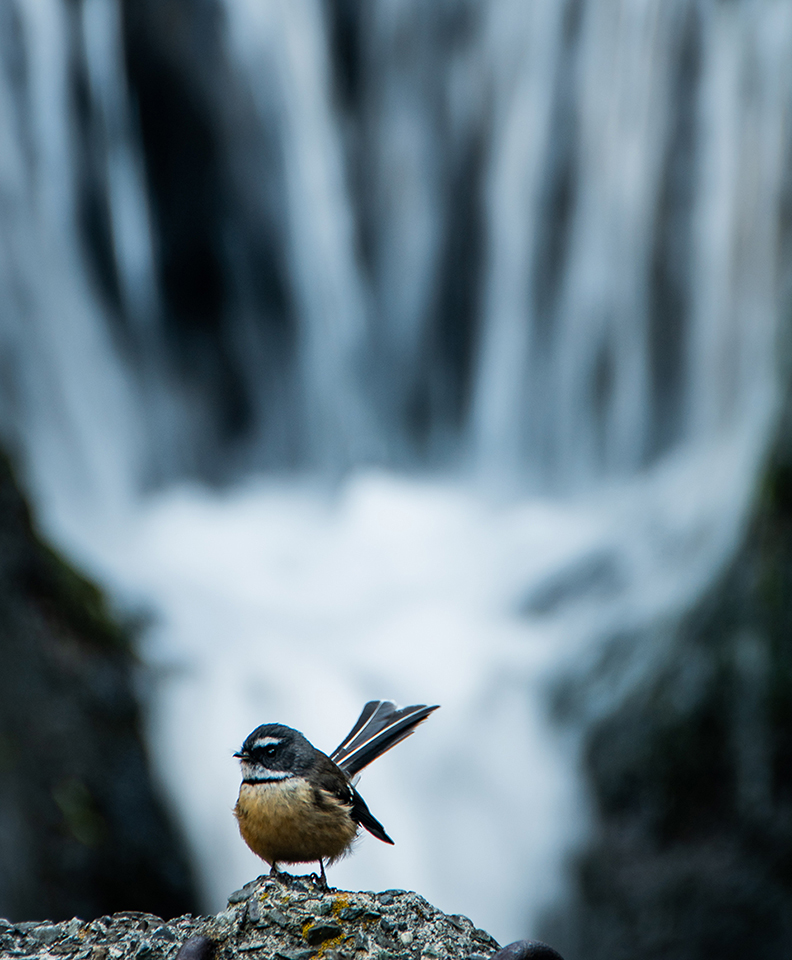
Their Story
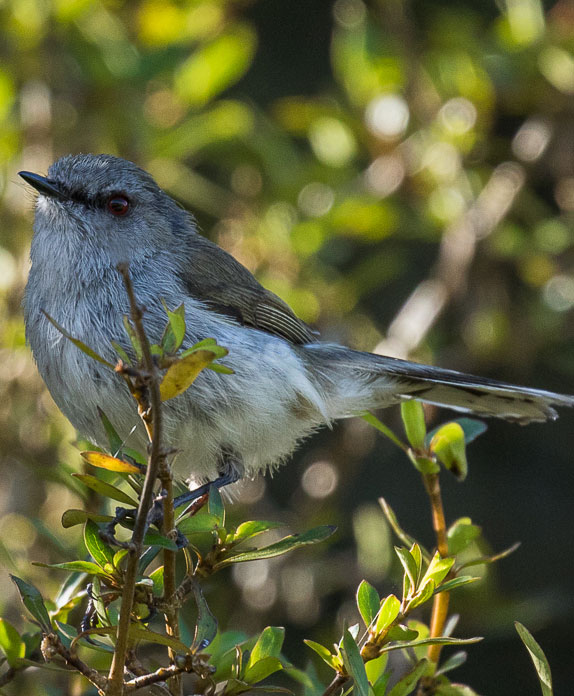
It’s rare to walk through the Brook Waimārama Sanctuary without being joined by a cheerful pīwakawaka (fantail). Common though they are, their friendly curiosity and acrobatic flight never fail to charm visitors.
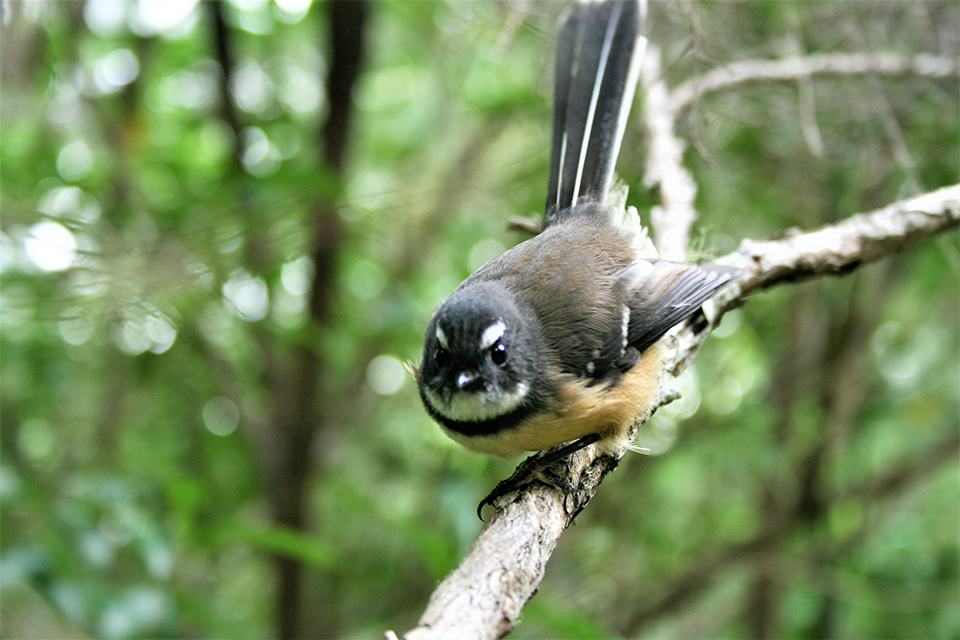
Fantails belong to the genus Rhipidura, found throughout Southeast Asia and the Antipodes. New Zealand has one species, Rhipidura fuliginosa, with four subspecies: the North Island fantail, the South Island fantail (Rhipidura fuliginosa fuliginosa), the Chatham Island fantail, and the extinct Lord Howe Island fantail. The South Island birds are slightly darker — the name fuliginosa means “sooty.” Black fantails are not a separate subspecies but a colour variation, found most often in the South Island where they make up about 5% of the population.
Pīwakawaka are widespread in both native and exotic forests, scrublands, orchards, and urban gardens. They do not cope well with cold winters and are uncommon in areas with snow or severe frost. South Island fantails typically live for only 1–2 years, compared to 5 years for North Island birds and up to 15 years for Australia’s willy wagtails. Nesting adults, eggs, and chicks are vulnerable to predation, especially from ship rats which can climb to their nests.
Fantails are prolific breeders. Pairs may raise up to three clutches of 3–5 eggs per season, remaining together year-round, though high winter mortality often forces survivors to find new mates. Nesting begins in late August. South Island males help build the nest — a neat circular cup woven between slender branches with a trailing tail of material below. Both parents incubate the eggs for about 13 days, and chicks fledge at 12–14 days old. Females often start building a new nest before the chicks fledge, leaving the male to feed them — up to 100 feeds per day.
Constantly active, pīwakawaka are insectivorous, feeding on moths, flies, spiders, wasps and beetles. They use several foraging techniques:
Hawking: darting through the air to catch flying insects.
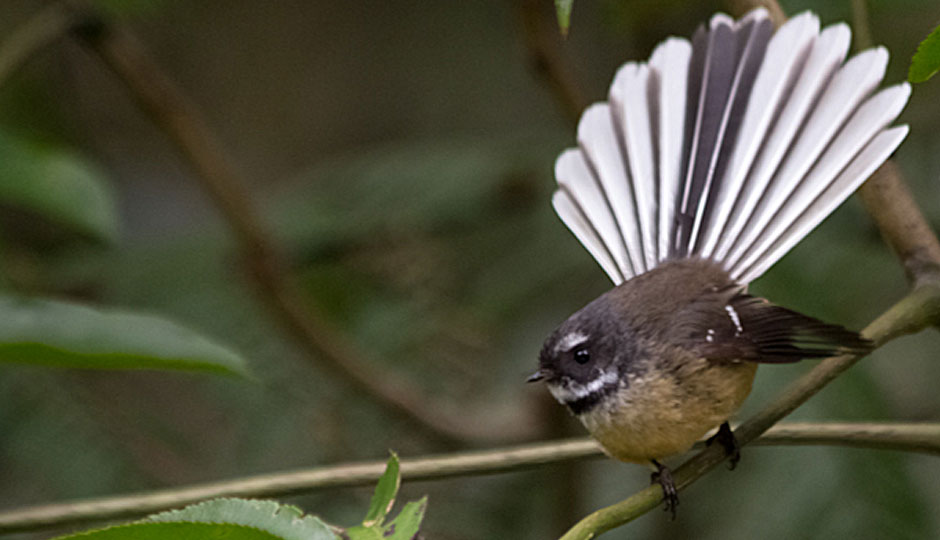
Flushing: flitting through dense bush, fanning their tails to disturb insects from foliage.
Feeding associations: following other birds, people, or animals to catch insects they stir up.
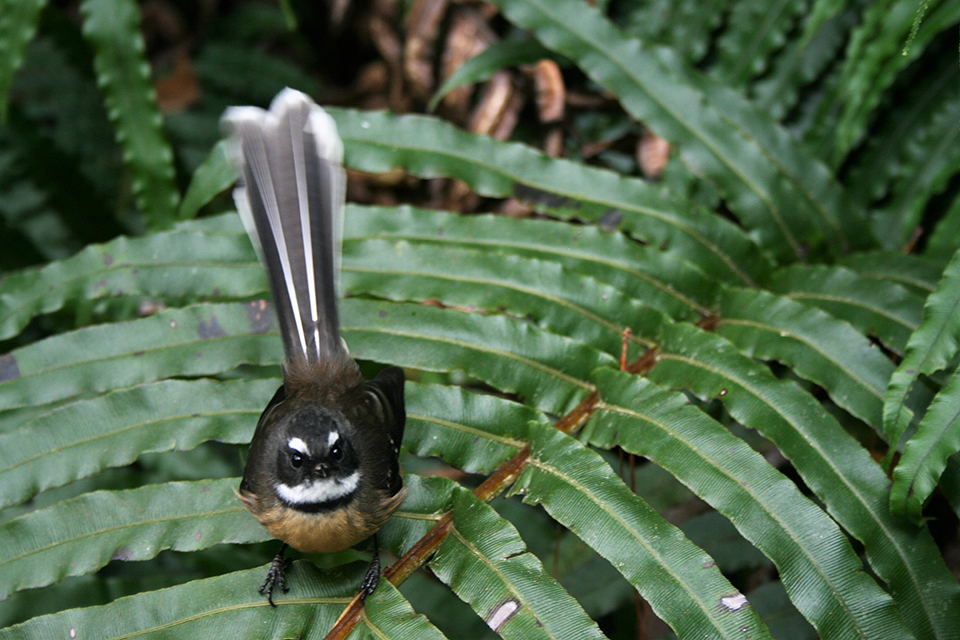
They are also often seen plucking insects from the undersides of fern fronds and will occasionally eat fruit.
Conservation Status

Not Threatened
Common and widespread throughout New Zealand.
Population

Found across the country in a variety of habitats including native and exotic forest, farmland, orchards, and gardens. Particularly abundant within the Brook Waimārama Sanctuary.
Voice

A sharp, chattering “cheet-cheet” and varied calls of chirps and squeaks. Their constant twittering and tail-fanning make them easy to spot.
Food

Insectivorous, feeding mainly on moths, flies, spiders, wasps, and beetles. Occasionally eats fruit.
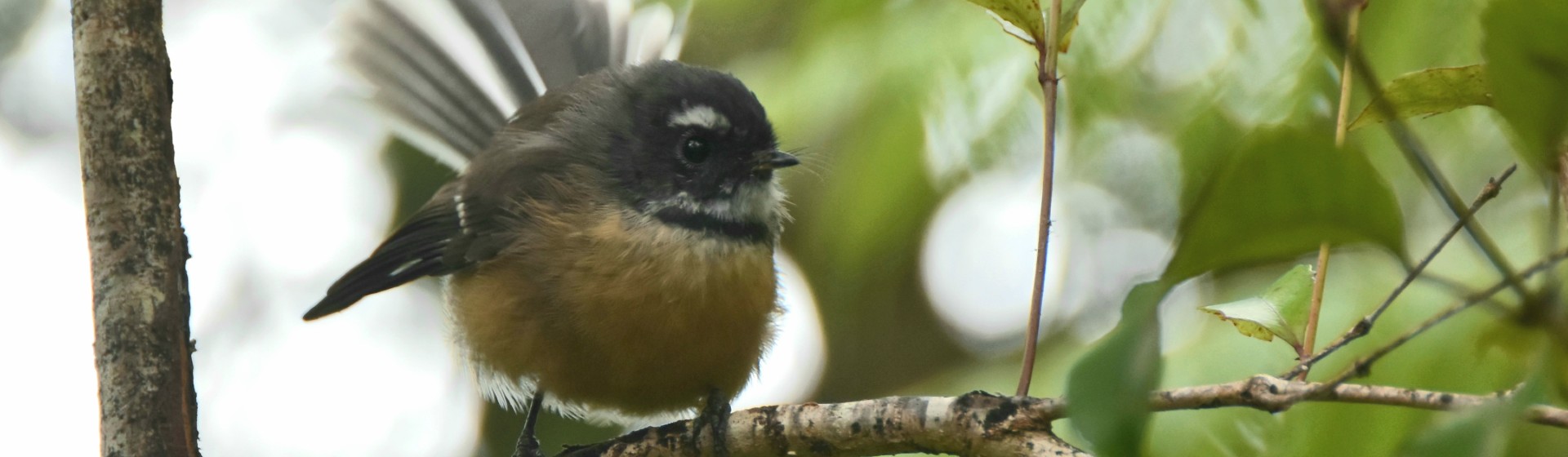
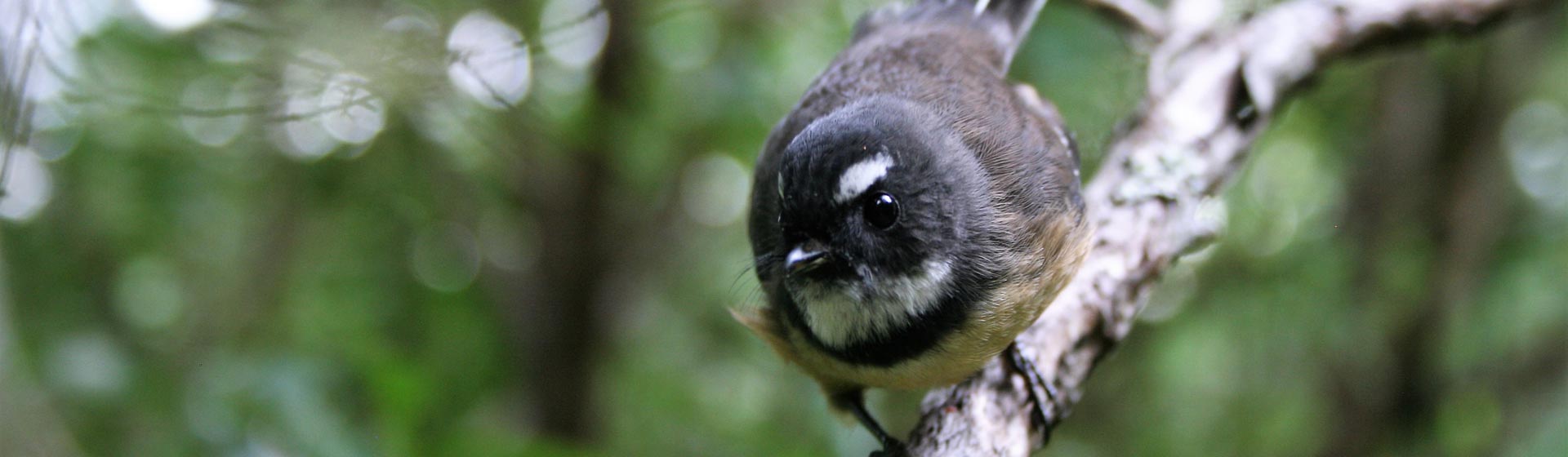
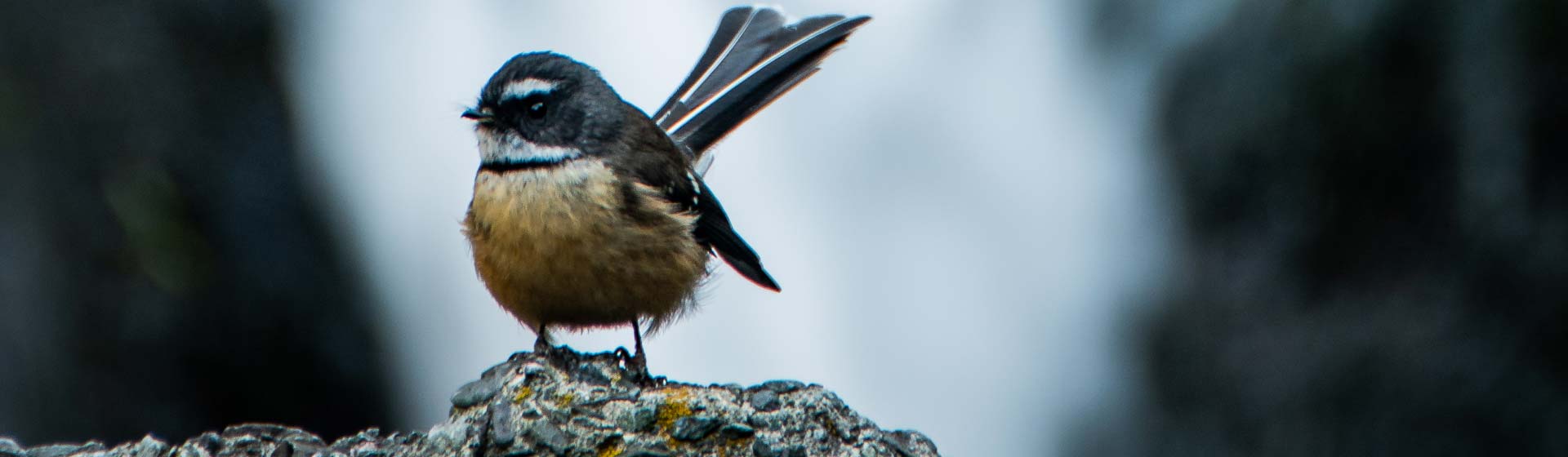
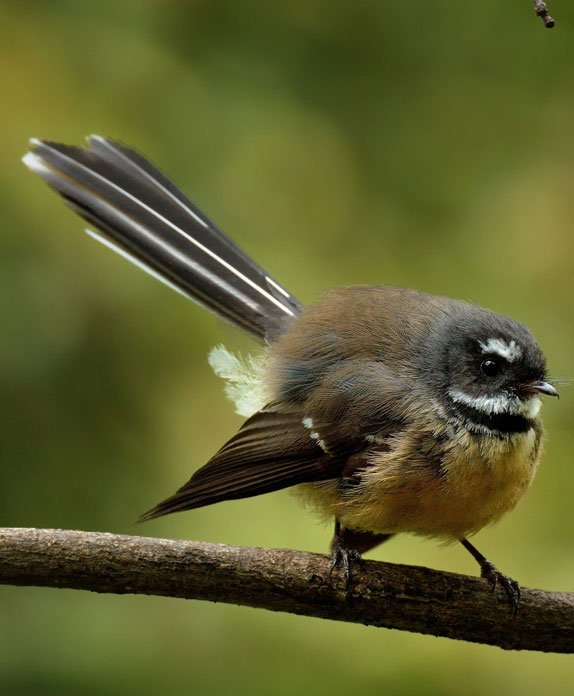
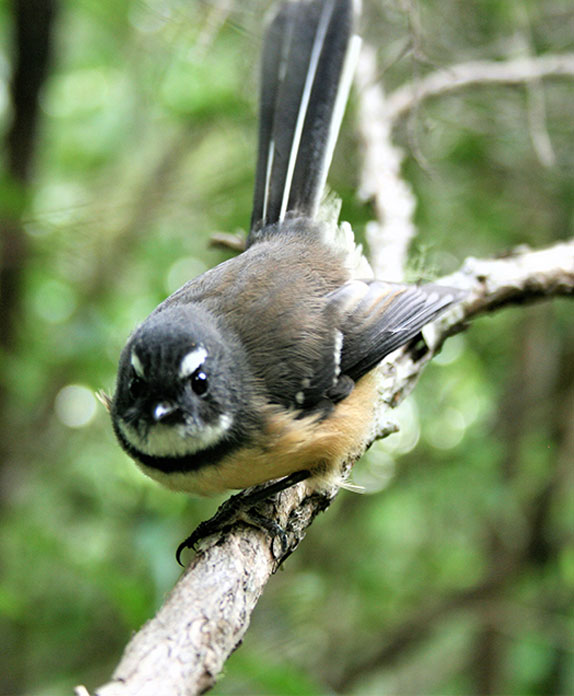
Small, agile birds with a distinctive black and white fan-shaped tail, dark upperparts, and pale underparts. South Island pīwakawaka (R. f. fuliginosa) are slightly darker — their name means “sooty.” Black morph fantails, found mainly in the South Island, are not a separate subspecies but a colour variation, making up around 5% of the population.
Pīwakawaka are expert insect hunters, feeding mainly on moths, flies, beetles, wasps, and spiders. They use several hunting techniques:
- Hawking: darting through large swarms of flying insects.
- Flushing: fanning their tails to dislodge and disturb insects from leaves.
- Feeding associations: following people, animals, or other birds to catch disturbed prey.
Fantails are prolific breeders, raising up to three clutches of three to five eggs per season. Breeding begins in late August. Males help build neat, cup-shaped nests woven between slender branches. Both parents share incubation (about 14 days) and feeding, though females often start new nests before chicks fledge, leaving males to care for fledglings — feeding them up to 100 times per day. South Island fantails typically live only one to two years, compared to five years in the North Island.
Pīwakawaka are widespread throughout Aotearoa, inhabiting forests, scrublands and many modified habitats. They are less common in colder alpine regions and areas with heavy frost. Within the Brook Waimārama Sanctuary, they thrive along forest tracks, glades, and waterways, where insect life is abundant.
Classified as Not Threatened, pīwakawaka populations remain stable. Nests can be vulnerable to ship rats. Harsh winters will reduce populations, however this species bounces back quickly. Their resilience, adaptability, and high reproductive rate help them quickly recover when conditions improve.
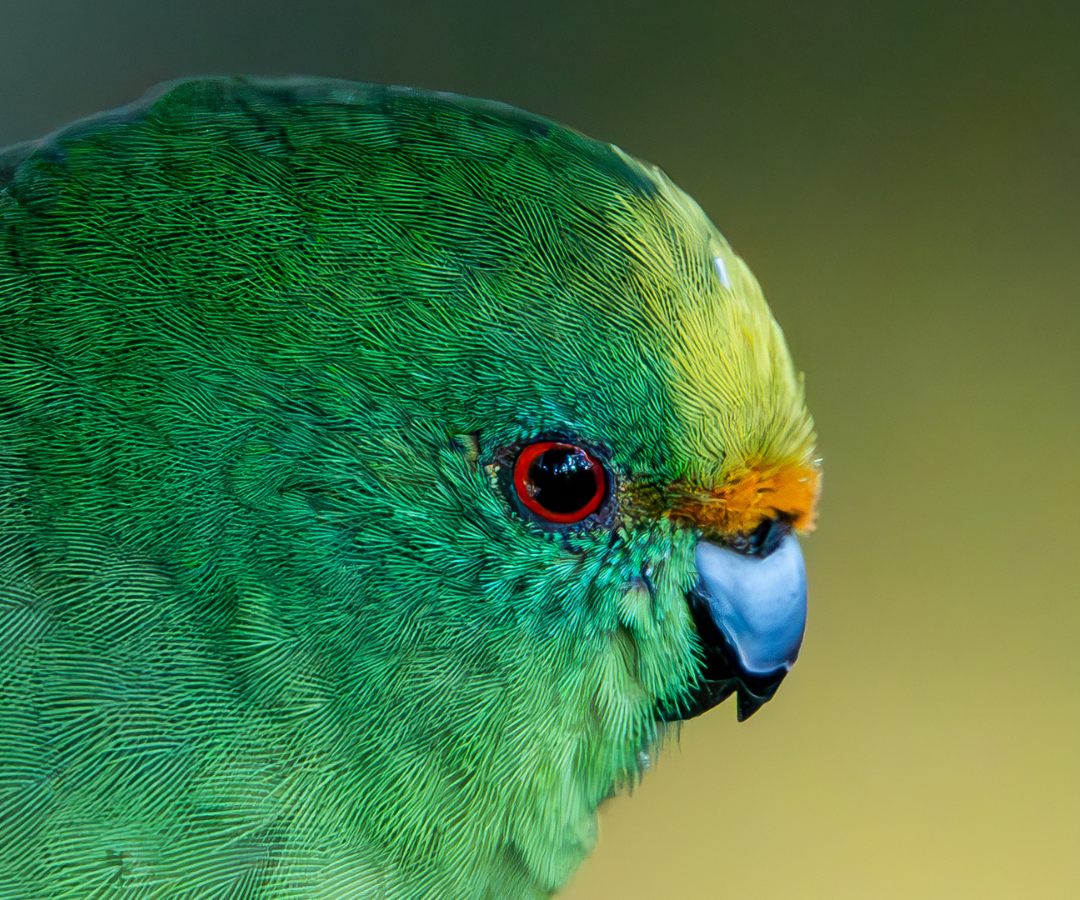
Even before pest eradication, pīwakawaka have been a defining presence in the Sanctuary. It is likely however, that this endemic species will decline in the Sanctuary as other endemic species increase or are reintroduced. Some of these species will form associations with fantails in mixed winter feeding flocks, like kākāriki, mohua and pīpipi.
🪶 Pīwakawaka can change direction mid-flight faster than any other New Zealand bird — allowing them to better catch insects on the wing.
Our other residents
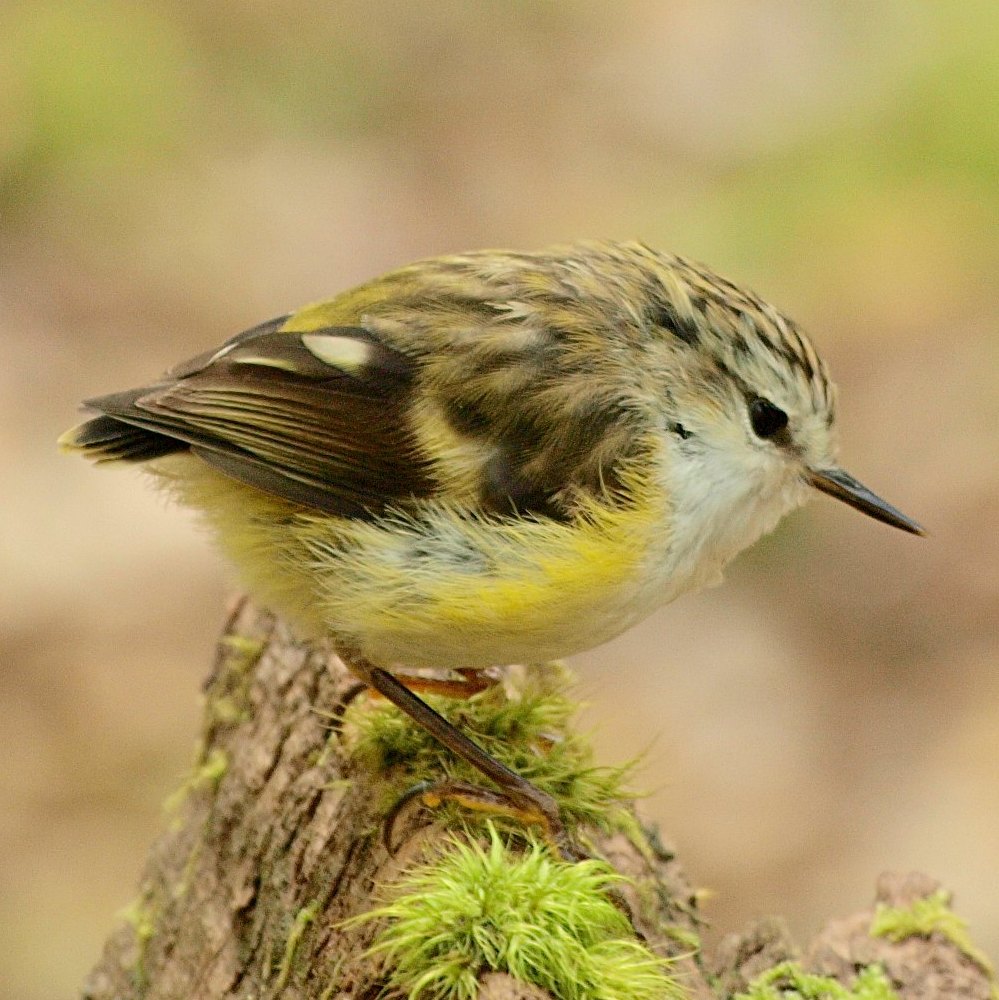
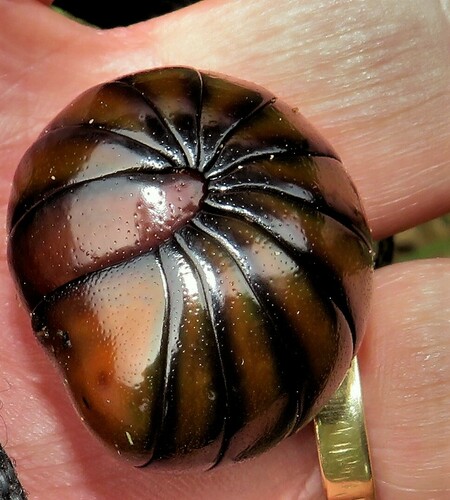
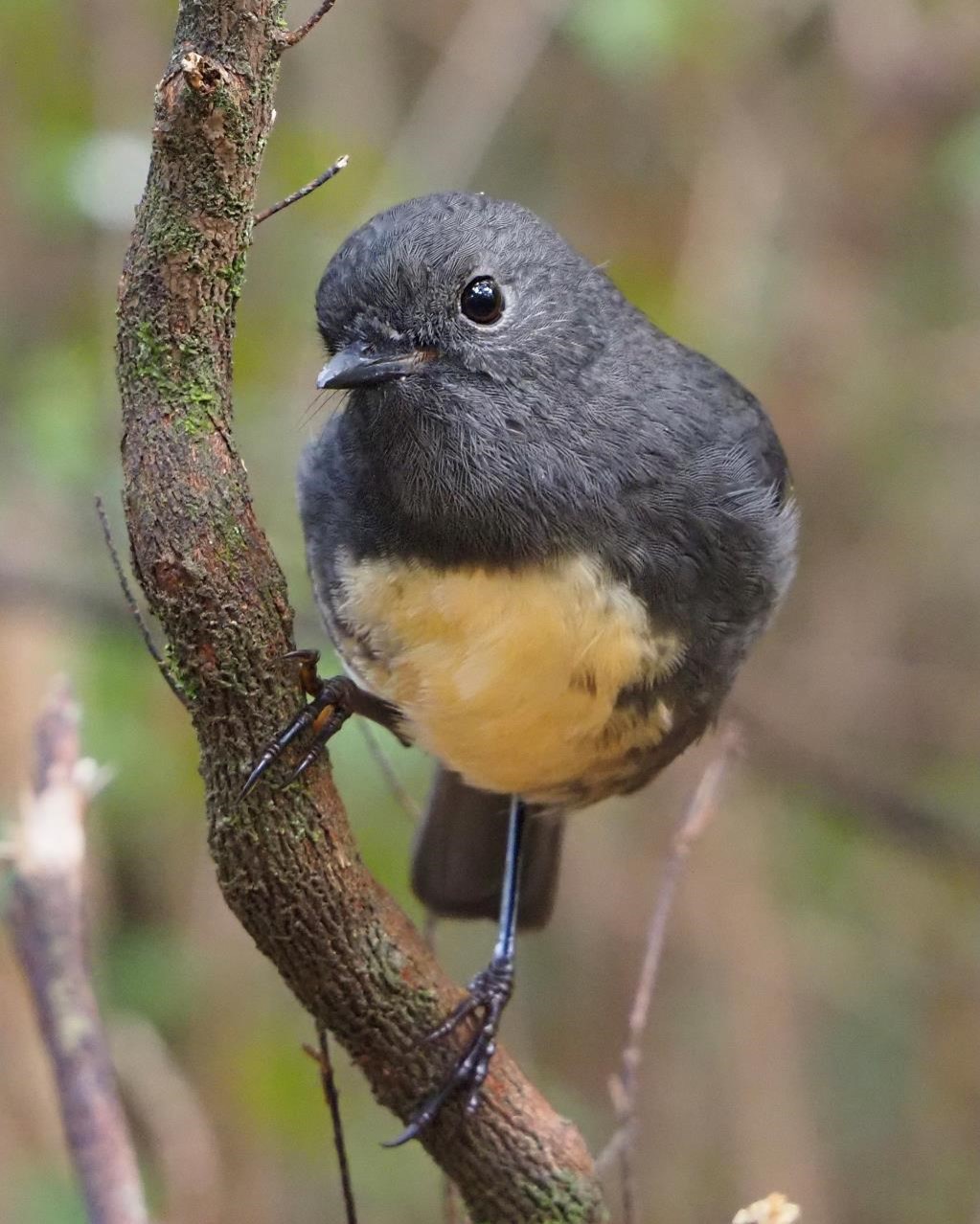
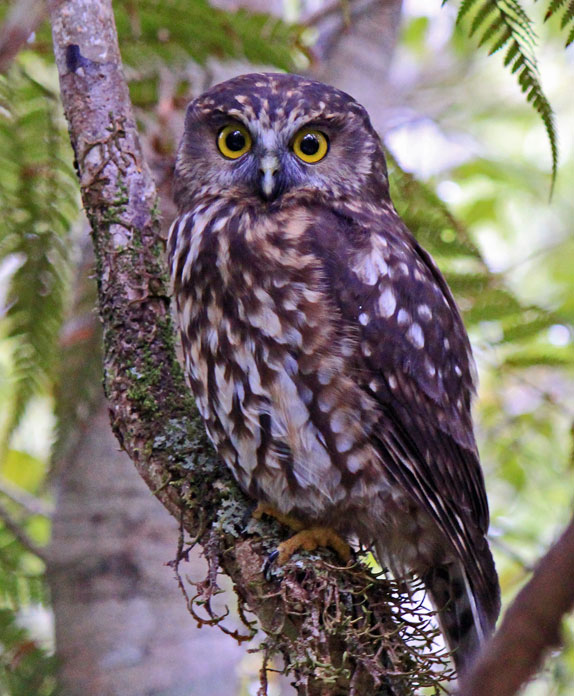
Check out some of the other incredible wildlife that call the Sanctuary home









Follow us on Instagram
@brooksanctuary
Share your photos with #brooksanctuary
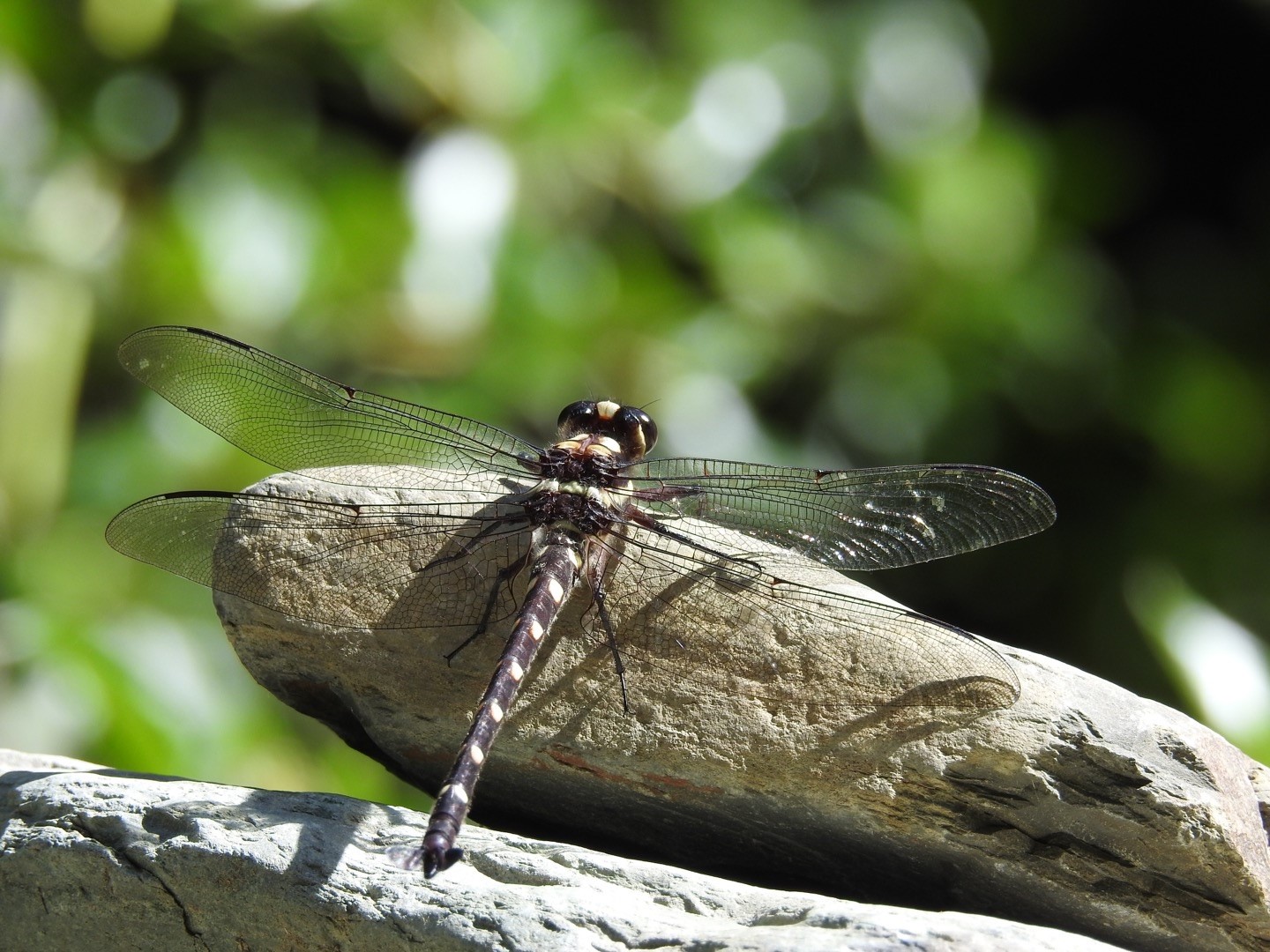
🪶 Ngahere Neighbourhood: piriwai (spiny gilled mayfly)
Tiny, ancient, and found only in Aotearoa — the spiny gilled mayfly (Coloburiscus humeralis) spends up to four years underwater before living just a few days as an adult.
Piriwai can only survive in clean, fast-flowing streams. Its larvae cling to river rocks, filtering food from the water with tiny hair-like gills. They are an important sign of healthy freshwater ecosystems, so much so that this species gets a rating of 8-9 on the sensitivity/stream health rating. All native stream macroinvertebrates are ranked in terms of their sensitivity and used as a bioindicator of stream health.
The Sanctuary stream is a reference site for stream health and represents a `pure`, unadulterated site and thus is highly diverse in sensitive stream invertebrates.
📸 Photo: Taken by Henry Hart here at the Sanctuary
#NgahereNeighbourhood #BrookSanctuary #AotearoaNature #FreshwaterLife #NelsonTasman #Conservation #Piriwai
Feb 17


Their Raucous Call Returns: Kākā Set to Reclaim the Brook Waimārama Sanctuary. 🦜
This March, we’re scheduled to welcome two male and one female kākā fledglings from the Dunedin Botanic Garden kākā breeding programme. There’s also the potential for a further four birds to arrive in May.
Kākā are unique to Aotearoa and are nationally vulnerable, with populations heavily impacted by introduced predators. Releasing them into a pest-free sanctuary with ideal habitat (old growth beech forest) gives them the best chance to thrive.
This release will build on years of species translocations as part of the Sanctuary’s ambitious ecosystem restoration efforts, including:
🏠 Kākāriki karaka in 2021
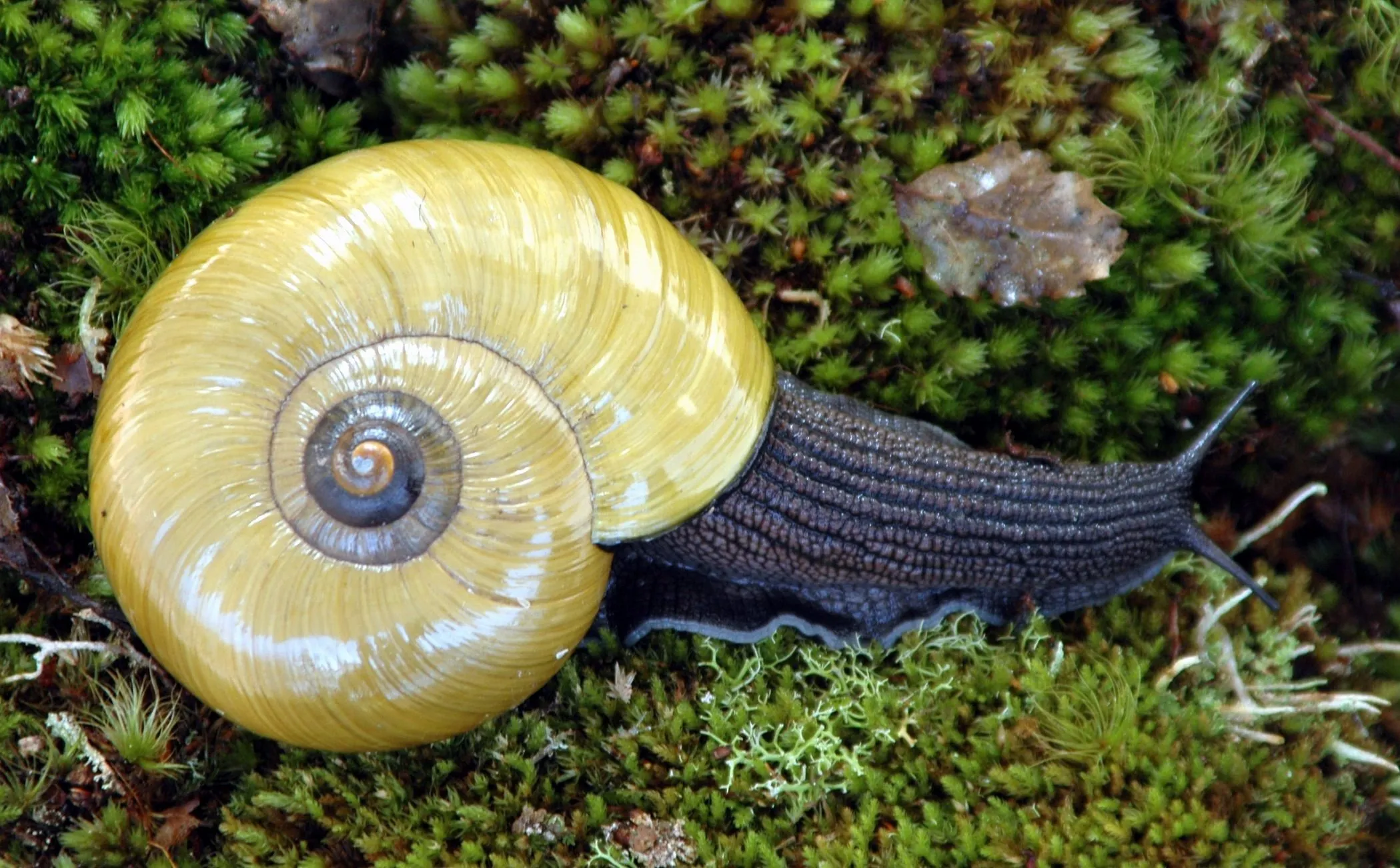
🏠 Powelliphanta hochstetteri consobrina (giant snails) in 2021
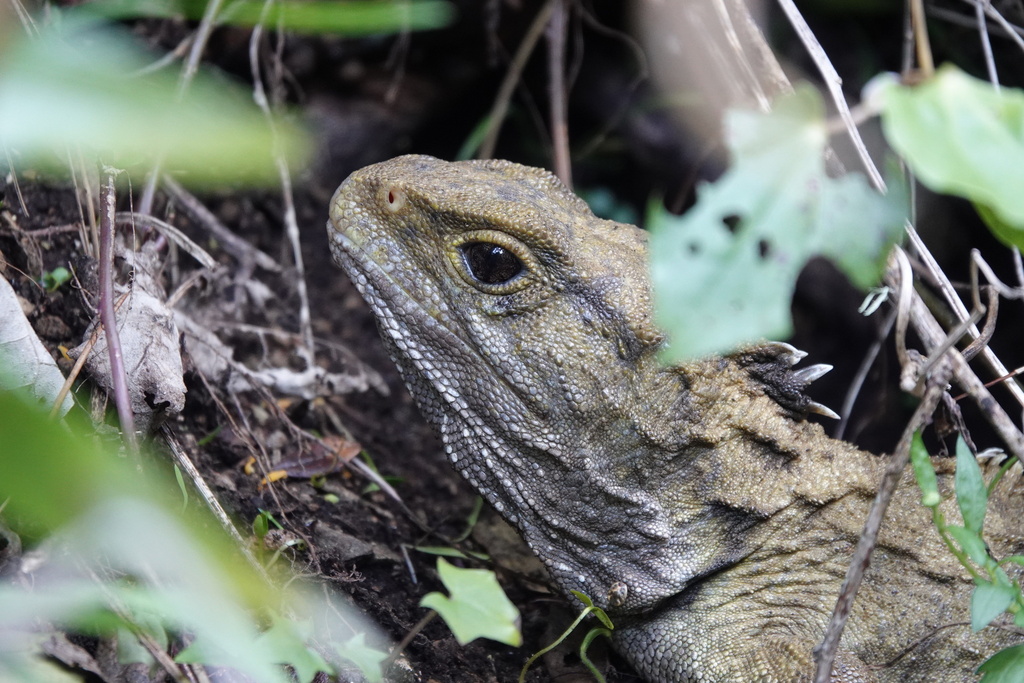
🏠 Tuatara in November 2024 and May 2025
🏠 Kiwi in May 2025
Over the coming weeks, our team will be busy planning and preparing for this important translocation. We’ll share more details on timing and what to expect closer to the date.
Thank you to our community of donors, volunteers, business supporters, and Sanctuary Members for continuing to back the Sanctuary — your support is vital to every species return. We can’t wait to celebrate this next milestone with you.
#BrookWaimāramaSanctuary #Kākā #ConservationNZ #NelsonNZ #PredatorFree #NativeWildlife #Biodiversity
Feb 10

Win prizes for your best summer photo at the Sanctuary 📸🏆☀️
This season, we want to see the Sanctuary through your lens — the bright light through the canopy, the textures of the forest floor, and the tiny details that make summer feel alive.
Enter our Summer Photography Competition (part of our Sanctuary Seasons series) and you could win:
🏆 Instant camera (Junior Photography winner)
🌙 Family ticket to a guided night tour
📰 Feature in our newsletter + social media
🖼️ Printed display at the Visitor Centre
📅 Entries close 28 February - Submit your entries via our website: Link in bio
Photo credit: Helen Power - Entry from the spring photography competition
#BrookWaimāramaSanctuary #SanctuarySeasons #Ngahere #NaturePhotography #NZWildlife #NelsonTasman #VisitNelson #NZHikes #EcoTourismNZ #ConservationStorytelling
Feb 4

Looking for a unique and memorable date night? 🌙🌲
This February, we’re introducing Date Me Darling — private, curated date nights inside the Sanctuary at dusk.
Three styled locations. One couple at a time. You’ll have a styled spot along the main loop track, locally sourced food and drinks, a few games to share, and time to slow down together as the forest shifts into evening.
Beech Glade: for when you want the world to fall away — deeply hidden, totally private, just you and the hush of the forest.
River: crystal clear water, canopy above, flickering lights — the kind of setup you usually only see on Instagram.
Meadow: open sky, long grass, and the forest standing quietly at the edges like it knows not to interrupt.
Bookings are open now (limited spaces in February only so don’t miss out!): Link in bio
#DateMeDarling #NelsonNZ #NelsonTasman #ThingsToDoNelson #DateNightIdeas #NatureLovers #SupportLocalNZ #ConservationNZ #BrookWaimāramaSanctuary
Feb 3

Two cute to be true?
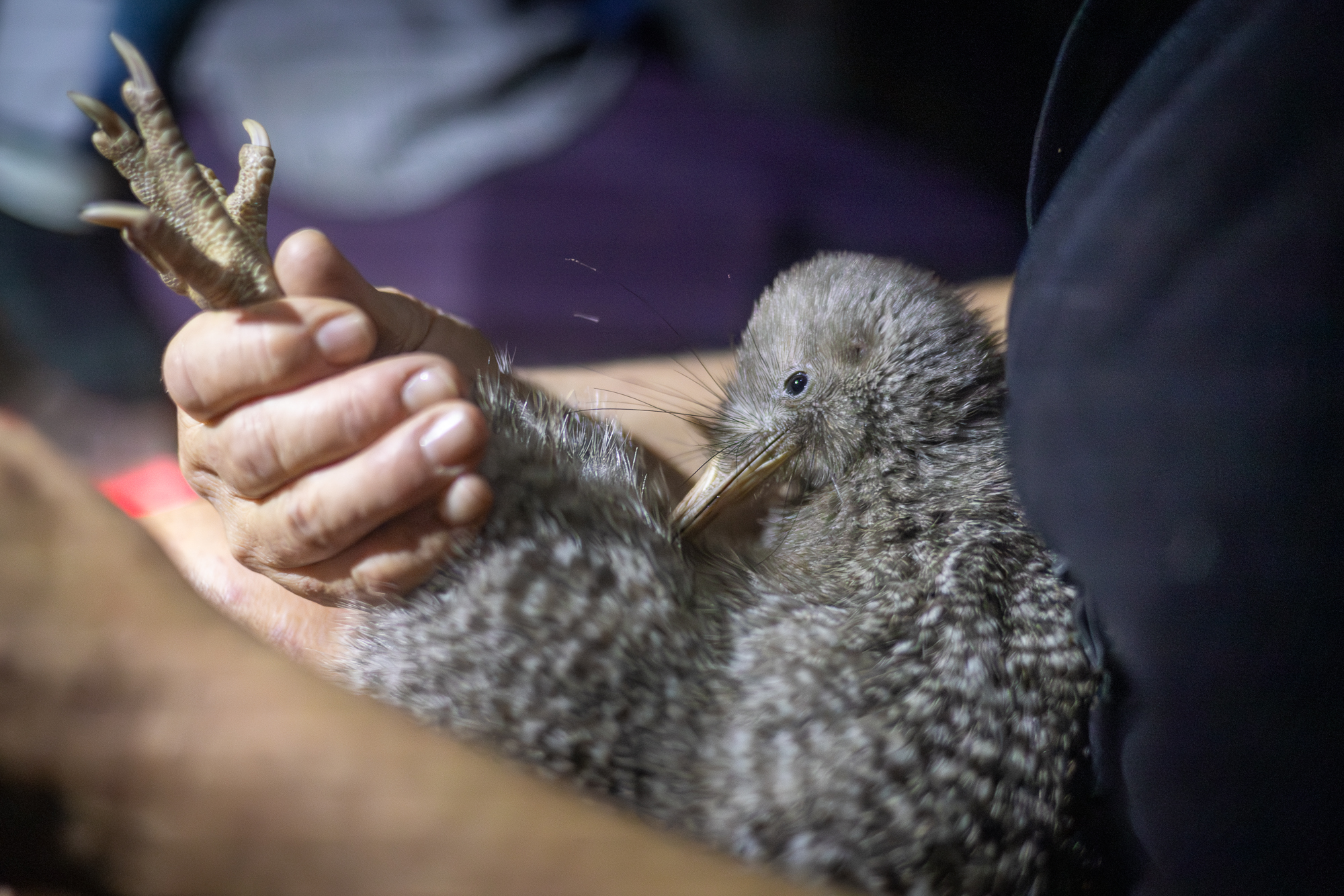
Brook Waimārama Sanctuary and @savethekiwinz teams have been busy over the past few days tracking and recapturing kiwi to remove their transmitters. Thanks to a huge team effort, all ten males were recaptured within just three days.
Some nest burrows held a surprise or two — in several cases a female was present, and a couple even contained chicks. One burrow amazed us all, with not one but two adorable chicks 😍
All chicks are fully independent at this stage of the season, and after quick health checks and transmitter removal, all adult kiwi were safely returned to their burrows.
This special footage was captured by kiwi handler Tamsin from Save the Kiwi, who led the transmitter removal mahi.
We estimate the 20 females and 21 males released in May last year have already produced around 10–15 kiwi pukupuku (little spotted kiwi) chicks in their very first breeding season — a strong sign the habitat is just right.
With transmitters now removed from all ten males, the kiwi are completely free, with no further handling needed. Annual kiwi call counts by staff and volunteers will help track the growing population across our 690 ha, ring-fenced, pest-free sanctuary.
Credit: Video courtesy of Tamsin Ward-Smith, Save the Kiwi
Thanks to our partnership with @terunangaotoa Ngati Toa and Save the Kiwi
#kiwipukupuku #littlespottedkiwi #brookwaimaramasanctuary #nelson #thetopofthesouth #conservation #biodiversity #nativebirds #natureloversnz #newzealandwildlife #pestfree #ringfencedsanctuary #conservationinaction
Jan 29

🎻 45 min string quartet concert at Brook Waimārama Sanctuary
Come and hear a dynamic young string quartet perform a 45 min concert at Brook Waimārama Sanctuary. We welcome everyone to come along, and bring anyone you think might be curious to hear some classical music in a relaxed environment.
The @antipodes.quartet is part of the Fellowship Ensemble Programme, a joint venture between the @adamchambermusicfestival, @newzealandstringquartet and @chambermusicnz, as a career-development experience offered to four of this country’s most promising young string players.
The Antipodes Quartet are Eden Annesley (violin), Mana Waiariki (violin), Tal Amoore (viola) and Lavinnia Rae (cello).
On this occasion, Brook Waimārama Sanctuary are welcoming everyone at local prices: Adult $15, Child $9; Family $35 (on the door)
Find out more: (Link in bio)
#BrookWaimāramaSanctuary #NelsonNZ #Whakatū #WhatsonNelson #NelsonTasman #LiveMusicNZ #ChamberMusicNZ #StringQuartet #ClassicalMusicNZ #AdamChamberMusicFestival #NewZealandStringQuartet #ChamberMusicNewZealand #FamilyFriendly #NatureAndCulture #SupportLocalArts
Jan 27
